I've played with some creepy characters in my day, but the bad guys in "Breaking Bad" take the cake.
I'm sure you would agree that any of these guys would creep the heck out of you if they were at your table in a game of five card stud draw.
But which one would creep you out the most?
Complete the survey and let us know.
At the Pen Festival 2010
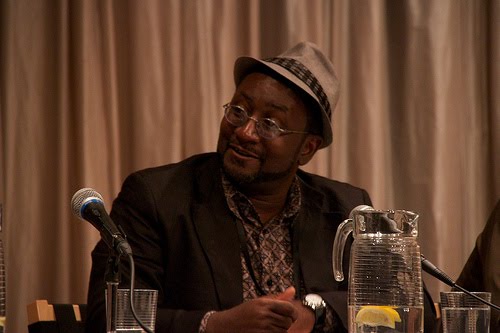
© PEN American Center/Susan Horgan. All rights reserved. Please contact media@pen.org for usage and rights.
July 22, 2013


Party like it's 99 (cents left in my pockets)
Fun, Fun, Fun in Babylon.
__________________________
“Casino bosses transform Sin City into Club City”
LAS VEGAS -- To step into club XS at the Wynn Las Vegas is to enter the dreamscape of a modern artist with fetishes for gold and bronze and bodies in motion.
A golden-plated frieze made from casts of nude women sits atop a shimmering staircase. Waves of electronic dance music grow louder with each downward step toward a pulsating, football field-sized club where lasers cut the air above thousands of dancers.
The revelers take their cues from the famous DJs onstage who are known to surf the crowd in inflatable rafts, throw sheet cakes at clubbers’ faces and spray vintage champagne into their mouths.
In Sin City, where over-the-top is always the sales pitch, lavish nightclubs featuring a heart-pounding party have become the backbone of a billion-dollar industry that is soaring while gambling revenue slips.
“We learned a long time ago that in order to continue to attract people from around the world, we have to provide things that are hard to find anywhere else,” said Jim Murren, CEO of MGM Resorts International, which operates nine Strip hotel-casinos boasting their own dance scenes. “These clubs, if done correctly, are tremendous magnets.”
A $100 million temple to revelry, XS is the top-earning nightclub in the country, joining six other Vegas venues in the top 10. Its estimated annual revenue hovers somewhere near $90 million, according to the trade publication Nightclub & Bar.
The city now boasts more than 50 such clubs. New additions are coming all the time, including the five-story Hakkasan at the MGM Grand, which debuted last month, and Light at Mandalay Bay, Cirque du Soleil’s first foray into the disco business, opening Memorial Day weekend.
The rise of the Vegas super-club coincides with the decline of the town’s gambling supremacy. The tiny Chinese enclave of Macau surpassed the desert oasis as the world’s top gambling destination in 2006. Singapore is on track to claim the No. 2 spot.
During the heart of the recession, when overall Strip revenues tumbled by 16 percent, nightclubs saw more profit than ever. By 2011, Las Vegas was clubbing all the way to the bank, with Strip beverage departments earning more than $1 billion. Casino tycoons began remaking the Strip into the club capital of the world.
With extravagantly paid DJs, larger-than-life venues and billboard ads that stretch beyond the Strip to Hollywood Boulevard and Miami, casinos are trying to pull off a tricky balancing act: keeping the kitschy core that draws older generations while finding a way to make the city hip enough to attract a younger, big-spending set — emphasis on big-spending.
“We’re not interested in competing against everyone to get the 21-year-olds that are going to spend little to no money and are going to clog up the hallways,” Murren said.
The 10-minute taxi ride from the airport to the Strip takes visitors past dozens of billboards promoting top DJs from Holland and beyond. Celine Dion and Elton John now take their place on marquees alongside names that recall Internet handles, such as “deadmau5” and “Kaskade.”
Las Vegas, long known for catching performers on the downswing of their careers, finally appears to have embraced a musical trend at the height of its popularity. Globe-trotting Dutch DJ Afrojack, 25, said he has come to consider the Strip his home because it’s the one place he believes is as dance-music-focused as he is.
By HANNAH DREIER (Associated Press)
__________________________
“Casino bosses transform Sin City into Club City”
LAS VEGAS -- To step into club XS at the Wynn Las Vegas is to enter the dreamscape of a modern artist with fetishes for gold and bronze and bodies in motion.
A golden-plated frieze made from casts of nude women sits atop a shimmering staircase. Waves of electronic dance music grow louder with each downward step toward a pulsating, football field-sized club where lasers cut the air above thousands of dancers.
The revelers take their cues from the famous DJs onstage who are known to surf the crowd in inflatable rafts, throw sheet cakes at clubbers’ faces and spray vintage champagne into their mouths.
In Sin City, where over-the-top is always the sales pitch, lavish nightclubs featuring a heart-pounding party have become the backbone of a billion-dollar industry that is soaring while gambling revenue slips.
“We learned a long time ago that in order to continue to attract people from around the world, we have to provide things that are hard to find anywhere else,” said Jim Murren, CEO of MGM Resorts International, which operates nine Strip hotel-casinos boasting their own dance scenes. “These clubs, if done correctly, are tremendous magnets.”
A $100 million temple to revelry, XS is the top-earning nightclub in the country, joining six other Vegas venues in the top 10. Its estimated annual revenue hovers somewhere near $90 million, according to the trade publication Nightclub & Bar.
The city now boasts more than 50 such clubs. New additions are coming all the time, including the five-story Hakkasan at the MGM Grand, which debuted last month, and Light at Mandalay Bay, Cirque du Soleil’s first foray into the disco business, opening Memorial Day weekend.
The rise of the Vegas super-club coincides with the decline of the town’s gambling supremacy. The tiny Chinese enclave of Macau surpassed the desert oasis as the world’s top gambling destination in 2006. Singapore is on track to claim the No. 2 spot.
During the heart of the recession, when overall Strip revenues tumbled by 16 percent, nightclubs saw more profit than ever. By 2011, Las Vegas was clubbing all the way to the bank, with Strip beverage departments earning more than $1 billion. Casino tycoons began remaking the Strip into the club capital of the world.
With extravagantly paid DJs, larger-than-life venues and billboard ads that stretch beyond the Strip to Hollywood Boulevard and Miami, casinos are trying to pull off a tricky balancing act: keeping the kitschy core that draws older generations while finding a way to make the city hip enough to attract a younger, big-spending set — emphasis on big-spending.
“We’re not interested in competing against everyone to get the 21-year-olds that are going to spend little to no money and are going to clog up the hallways,” Murren said.
The 10-minute taxi ride from the airport to the Strip takes visitors past dozens of billboards promoting top DJs from Holland and beyond. Celine Dion and Elton John now take their place on marquees alongside names that recall Internet handles, such as “deadmau5” and “Kaskade.”
Las Vegas, long known for catching performers on the downswing of their careers, finally appears to have embraced a musical trend at the height of its popularity. Globe-trotting Dutch DJ Afrojack, 25, said he has come to consider the Strip his home because it’s the one place he believes is as dance-music-focused as he is.
By HANNAH DREIER (Associated Press)
July 17, 2013
Sailing Away to Gamble in Bimini
Nice
___________________
"Getting Shipping Could Bring 3000 people a day to its Bimini Hotel"
By Douglas Hanks dhanks@MiamiHerald.com
Genting hasn’t been able to bring a casino to Miami, but soon it will be able to bring a sizeable chunk of Miami to a casino.
The Malaysian company is preparing to launch a small cruise ship capable of whisking more than 1,500 passengers from Port Miami to its new casino two hours away in Bimini.Neither side was granting interviews Tuesday, but a draft port agreement posted Tuesday night on the county’s website outlined the deal. Genting will pay about $11 million upfront to fund the county’s refurbishment of Terminal H for the new ship, and then be reimbursed in the form of rent credits for the construction cost. The agreement, to be voted on by the County Commission next month, calls for Genting to pay the port about $7 million yearly in rent.
Genting executives had initial talks with port executives and county commissioners Audrey Edmonson and Lynda Bell, who heads the committee that oversees the port, during an April meeting in Singapore, according to a source familiar with the county-funded trip.
The new ship, which is already docked at Port Miami, is slated to make its first official run to Bimini on Friday, with a ceremony featuring Bahamian and Miami-Dade leaders and top Genting executives. Genting plans to offer two trips a day: the first leaving at 9 a.m. and returning at 7 p.m., and a second “Night Party Cruise” leaving at 9 p.m. and returning at 5 a.m. Tickets start at $49.
The launch of the Bimini SuperFast marks a big step for Genting’s entry into the local gambling market. The company purchased the old Miami Herald headquarters in 2011 but the Legislature did not provide the needed change in state gambling laws to put a casino there. Genting said it still plans to build a large residential and hotel complex on the site, and it will bear the company’s global brand, Resorts World Miami.
Last year, Genting announced plans to turn the Bimini Bay Resort into Resorts World Bimini, and is planning to officially open the casino Friday with the new boat’s maiden voyage. At 10,000-square-feet, the casino is tiny when compared to the 140,000 square feet at the Seminole Hard Rock casino in Hollywood and 67,000 square feet at the Miccosukee casino in western Miami-Dade.
Genting hopes the allure of a largely unspoiled Bahamian island and the fun of an ocean voyage will make Bimini Bay a sought-after day trip for locals and vacationers. And Genting is pointing out that its Bimini resort won’t be governed by the more restrictive gambling laws of Florida, and can offer “Vegas-style” gambling, including roulette, craps, baccarat and bets on professional sports.
But one veteran of the casino-resort industry said the location could be a challenge for Genting.
“There are some good gaming offerings already in South Florida,’’ said Howard Karawan, who once ran the Atlantis casino resort in Nassau and presided over the re-launch of the Fontainebleau Miami Beach. “While Bimini has some nice offerings, there’s going to have to be more than just a little casino to attract them over there.”
___________________
"Getting Shipping Could Bring 3000 people a day to its Bimini Hotel"
By Douglas Hanks dhanks@MiamiHerald.com
Genting hasn’t been able to bring a casino to Miami, but soon it will be able to bring a sizeable chunk of Miami to a casino.
The Malaysian company is preparing to launch a small cruise ship capable of whisking more than 1,500 passengers from Port Miami to its new casino two hours away in Bimini.Neither side was granting interviews Tuesday, but a draft port agreement posted Tuesday night on the county’s website outlined the deal. Genting will pay about $11 million upfront to fund the county’s refurbishment of Terminal H for the new ship, and then be reimbursed in the form of rent credits for the construction cost. The agreement, to be voted on by the County Commission next month, calls for Genting to pay the port about $7 million yearly in rent.
Genting executives had initial talks with port executives and county commissioners Audrey Edmonson and Lynda Bell, who heads the committee that oversees the port, during an April meeting in Singapore, according to a source familiar with the county-funded trip.
The new ship, which is already docked at Port Miami, is slated to make its first official run to Bimini on Friday, with a ceremony featuring Bahamian and Miami-Dade leaders and top Genting executives. Genting plans to offer two trips a day: the first leaving at 9 a.m. and returning at 7 p.m., and a second “Night Party Cruise” leaving at 9 p.m. and returning at 5 a.m. Tickets start at $49.
The launch of the Bimini SuperFast marks a big step for Genting’s entry into the local gambling market. The company purchased the old Miami Herald headquarters in 2011 but the Legislature did not provide the needed change in state gambling laws to put a casino there. Genting said it still plans to build a large residential and hotel complex on the site, and it will bear the company’s global brand, Resorts World Miami.
Last year, Genting announced plans to turn the Bimini Bay Resort into Resorts World Bimini, and is planning to officially open the casino Friday with the new boat’s maiden voyage. At 10,000-square-feet, the casino is tiny when compared to the 140,000 square feet at the Seminole Hard Rock casino in Hollywood and 67,000 square feet at the Miccosukee casino in western Miami-Dade.
Genting hopes the allure of a largely unspoiled Bahamian island and the fun of an ocean voyage will make Bimini Bay a sought-after day trip for locals and vacationers. And Genting is pointing out that its Bimini resort won’t be governed by the more restrictive gambling laws of Florida, and can offer “Vegas-style” gambling, including roulette, craps, baccarat and bets on professional sports.
But one veteran of the casino-resort industry said the location could be a challenge for Genting.
“There are some good gaming offerings already in South Florida,’’ said Howard Karawan, who once ran the Atlantis casino resort in Nassau and presided over the re-launch of the Fontainebleau Miami Beach. “While Bimini has some nice offerings, there’s going to have to be more than just a little casino to attract them over there.”
Avoiding a Gambling Disaster Out at Sea
Well, most of us gamblers regularly take a bath at the casinos.
__________________
“Genting’s Casino Ship Fails Safety Inspection , Will Remain Docked”
The cruise ship Genting Group had planned to sail to its Bimini casino resort last week failed to meet U.S. Coast Guard requirements, The Miami Herald reports.
The Bimini SuperFast was originally scheduled to set sail on Friday, but the ship and its operators failed tests gauging performance in emergency situations, the Coast Guard said. The crew was unable to meet the requirement that passengers must be off the ship and in lifeboats within 30 minutes, said Janet Espino-Young, chief of the inspection division at the U.S. Coast Guard. Espino-Young told the Herald that emergency power sources a
nd the mechanism that lowers the lifeboats into the water malfunctioned. The crew was able to perform the drill on Saturday; however, the Coast Guard said it will continue to work with the crew because other discrepancies still remain.
The SuperFast is expected to sail twice daily to Genting's casino resort on the Bimini island. The ferry is expected to create at least 800 jobs, and provide PortMiami with about $6 million in fees annually for a total of $60 million over the initial 10 years of the contract.
__________________
“Genting’s Casino Ship Fails Safety Inspection , Will Remain Docked”
The cruise ship Genting Group had planned to sail to its Bimini casino resort last week failed to meet U.S. Coast Guard requirements, The Miami Herald reports.
The Bimini SuperFast was originally scheduled to set sail on Friday, but the ship and its operators failed tests gauging performance in emergency situations, the Coast Guard said. The crew was unable to meet the requirement that passengers must be off the ship and in lifeboats within 30 minutes, said Janet Espino-Young, chief of the inspection division at the U.S. Coast Guard. Espino-Young told the Herald that emergency power sources a
nd the mechanism that lowers the lifeboats into the water malfunctioned. The crew was able to perform the drill on Saturday; however, the Coast Guard said it will continue to work with the crew because other discrepancies still remain.
The SuperFast is expected to sail twice daily to Genting's casino resort on the Bimini island. The ferry is expected to create at least 800 jobs, and provide PortMiami with about $6 million in fees annually for a total of $60 million over the initial 10 years of the contract.
July 12, 2013
Probe into the Miccosukee's Gambling Profits
Naught, naughty. Bad boy. Bad boy.
______________________
“IRS steps up probe of Miccosukee Tribe’s payouts of gambling profits to members”
(Miami Herald) The Internal Revenue Service has escalated its investigation into the Miccosukee Indians’ finances, demanding that the West Miami-Dade tribe hand over a mountain of internal records showing millions in allegedly unreported payments from its gambling profits to tribal members.
The IRS’ sweeping new action, which the Miccosukees are trying to stop in Miami federal court, seeks internal documents of the tribe’s gaming distributions during 2006-2010 as well as its council meeting records on tax matters from as far back as 1985.
The agency is demanding a long list of documents — from Miccosukee disbursement statements to check register reports, plus any tax advice from tribal lawyers and accountants. It’s part of an aggressive push to recover potentially tens of millions of dollars in back income taxes.
The tribe lashed out at the IRS.
“No longer is there even a pretense that the United States is not seeking to harass the Miccosukee Tribe and its members,” the tribe claims in court documents.
“The Miccosukee Tribe is not subject to income taxes, yet the IRS seeks all of its records based on sections of the [tax code] that do not even apply to the tribe,” wrote Miccosukee lawyer Bernardo Roman III in court documents.
Roman could not be reached for further comment Tuesday.
The federal agency’s legal battle with the Miccsosukees has been raging over the past decade, with the IRS winning a series of fights over access to the tribe’s financial accounts held by banks and other third parties. The tribe, which has tried to use its sovereign status to block the IRS’ civil probe, might now be on the hook for taxes owed by many of its 600 members.
The reason: The tribe’s status as a sovereign nation means the entity itself is not subject to taxes under federal law. But once the tribe distributes profits from its gambling casino to members, they are individually responsible for reporting and paying taxes on their annual income tax returns, according to the IRS. The tribe is also responsible for reporting and withholding a portion of any personal income distributed from its gambling enterprise featuring bingo-style slot machines and poker.
Earlier this year, the tribe admitted that more than 100 Miccosukee Indians owed the federal government about $25.8 million in back taxes, penalties and interest on income the tribe handed out from its gaming operation off the Tamiami Trail during 2000-05.
A federal judge has repeatedly sided with the IRS in its quest to obtain the tribe’s financial records. Last month, U.S. District Judge Alan S. Gold denied the tribe’s bid to block the IRS’ summons for Miccosukee financial accounts for 2010.
Gold said the U.S. government’s sovereignty was “superior” to that of the tribe, and therefore the Miccosukees must release their financial records held by Morgan Stanley Smith Barney, American Express, CitiBank and Wachovia.
Gold’s ruling was consistent with his previous decision ordering the tribe to turn over the same financial records for 2006-09.
The tribe has a long history of fighting the federal government over major issues ranging from income taxes to the cleanup of the Everglades.
But since the ouster of Miccosukee Chairman Billy Cypress in late 2009, the tribe has filed one lawsuit after another against the former leader and his inner circle of advisers, including two ex-U.S. attorneys in Miami who represented the Miccosukees.
In a federal suit filed last month, the tribe accused Cypress of stealing $26 million from the Miccosukees to spend on numerous gambling trips, shopping sprees, real-estate investments and luxury cars. The suit claims Cypress conspired with two former Miccosukee financial officers, former U.S. attorneys Dexter Lehtinen and Guy Lewis, and a Miami brokerage firm, Morgan Stanley Smith Barney, to keep the tribe in the dark about his alleged “criminal enterprise.”
The federal racketeering suit claims the tribe did not “discover this massive web of financial theft, embezzlement and fraud until 2010,” when Colley Billie replaced Cypress as the Miccosukee chairman.
The suit details a total of $11.5 million in ATM withdrawals by Cypress at casinos in Las Vegas and elsewhere, along with an additional $4 million in American Express charges for jewelry, restaurants and other expenses, between 2006 and 2009. Cypress also acquired nearly a dozen properties and residences, from Miami-Dade to Panama City Beach, worth a total of $4 million.
The tribe’s suit targeting him is the latest of his legal woes. In 2010, the IRS claimed that Cypress personally owed the government almost $2.8 million in taxes and penalties on $6.65 million in unreported income during 2003-05.
______________________
“IRS steps up probe of Miccosukee Tribe’s payouts of gambling profits to members”
(Miami Herald) The Internal Revenue Service has escalated its investigation into the Miccosukee Indians’ finances, demanding that the West Miami-Dade tribe hand over a mountain of internal records showing millions in allegedly unreported payments from its gambling profits to tribal members.
The IRS’ sweeping new action, which the Miccosukees are trying to stop in Miami federal court, seeks internal documents of the tribe’s gaming distributions during 2006-2010 as well as its council meeting records on tax matters from as far back as 1985.
The agency is demanding a long list of documents — from Miccosukee disbursement statements to check register reports, plus any tax advice from tribal lawyers and accountants. It’s part of an aggressive push to recover potentially tens of millions of dollars in back income taxes.
The tribe lashed out at the IRS.
“No longer is there even a pretense that the United States is not seeking to harass the Miccosukee Tribe and its members,” the tribe claims in court documents.
“The Miccosukee Tribe is not subject to income taxes, yet the IRS seeks all of its records based on sections of the [tax code] that do not even apply to the tribe,” wrote Miccosukee lawyer Bernardo Roman III in court documents.
Roman could not be reached for further comment Tuesday.
The federal agency’s legal battle with the Miccsosukees has been raging over the past decade, with the IRS winning a series of fights over access to the tribe’s financial accounts held by banks and other third parties. The tribe, which has tried to use its sovereign status to block the IRS’ civil probe, might now be on the hook for taxes owed by many of its 600 members.
The reason: The tribe’s status as a sovereign nation means the entity itself is not subject to taxes under federal law. But once the tribe distributes profits from its gambling casino to members, they are individually responsible for reporting and paying taxes on their annual income tax returns, according to the IRS. The tribe is also responsible for reporting and withholding a portion of any personal income distributed from its gambling enterprise featuring bingo-style slot machines and poker.
Earlier this year, the tribe admitted that more than 100 Miccosukee Indians owed the federal government about $25.8 million in back taxes, penalties and interest on income the tribe handed out from its gaming operation off the Tamiami Trail during 2000-05.
A federal judge has repeatedly sided with the IRS in its quest to obtain the tribe’s financial records. Last month, U.S. District Judge Alan S. Gold denied the tribe’s bid to block the IRS’ summons for Miccosukee financial accounts for 2010.
Gold said the U.S. government’s sovereignty was “superior” to that of the tribe, and therefore the Miccosukees must release their financial records held by Morgan Stanley Smith Barney, American Express, CitiBank and Wachovia.
Gold’s ruling was consistent with his previous decision ordering the tribe to turn over the same financial records for 2006-09.
The tribe has a long history of fighting the federal government over major issues ranging from income taxes to the cleanup of the Everglades.
But since the ouster of Miccosukee Chairman Billy Cypress in late 2009, the tribe has filed one lawsuit after another against the former leader and his inner circle of advisers, including two ex-U.S. attorneys in Miami who represented the Miccosukees.
In a federal suit filed last month, the tribe accused Cypress of stealing $26 million from the Miccosukees to spend on numerous gambling trips, shopping sprees, real-estate investments and luxury cars. The suit claims Cypress conspired with two former Miccosukee financial officers, former U.S. attorneys Dexter Lehtinen and Guy Lewis, and a Miami brokerage firm, Morgan Stanley Smith Barney, to keep the tribe in the dark about his alleged “criminal enterprise.”
The federal racketeering suit claims the tribe did not “discover this massive web of financial theft, embezzlement and fraud until 2010,” when Colley Billie replaced Cypress as the Miccosukee chairman.
The suit details a total of $11.5 million in ATM withdrawals by Cypress at casinos in Las Vegas and elsewhere, along with an additional $4 million in American Express charges for jewelry, restaurants and other expenses, between 2006 and 2009. Cypress also acquired nearly a dozen properties and residences, from Miami-Dade to Panama City Beach, worth a total of $4 million.
The tribe’s suit targeting him is the latest of his legal woes. In 2010, the IRS claimed that Cypress personally owed the government almost $2.8 million in taxes and penalties on $6.65 million in unreported income during 2003-05.
July 11, 2013
Say it ain't so, Joe
Shoeless Joe Jackson, a major star in the league, was on that legendary team, and I think this is where the phrase “Say it ain’t so, Joe” came from. It was said by a seven-year old fan hugging Jackson's pant leg after the news reports came out. He was pleading for his hero not to have been one of the cheaters that took the bribe. He was desperately trying to hold on to the illusion that excellence on the playing field implies excellence of character.
_______________
“Corey Nachman and Dashiell Bennett; The 16 Most Legendary Stories of Gambling in sports; from Businessinsider.com)
The fixing of the 1919 World Series is still the most infamous sports gambling moment of all time.
Eight White Sox players were paid a total of $100,000 to purposely lose the Fall Classic, so gamblers could clean up betting on Cincinnati. The players were easily convinced due to their hatred of owner Charles Comiskey, who was notorious for underpaying his players.
Although the "Black Sox" — including the legendary "Shoeless Joe" Jackson — were found innocent of any crimes by a grand jury, Commissioner Kenesaw Mountain Landis banned them from baseball for life, a ban that stand to this day.
_______________
“Corey Nachman and Dashiell Bennett; The 16 Most Legendary Stories of Gambling in sports; from Businessinsider.com)
The fixing of the 1919 World Series is still the most infamous sports gambling moment of all time.
Eight White Sox players were paid a total of $100,000 to purposely lose the Fall Classic, so gamblers could clean up betting on Cincinnati. The players were easily convinced due to their hatred of owner Charles Comiskey, who was notorious for underpaying his players.
Although the "Black Sox" — including the legendary "Shoeless Joe" Jackson — were found innocent of any crimes by a grand jury, Commissioner Kenesaw Mountain Landis banned them from baseball for life, a ban that stand to this day.
The Gambling Nun
Ever heard of the flying nun? Well, here is the story of the gambling nun.
Sad. This addiction too often brings out the criminal in us. She must feel like P the protagonist in All or Nothing.
(Associated Press. 07.08.13)
"NY Nun with Gambling Problem Gets Jail"
ALBION, N.Y. -- A Roman Catholic nun has been sentenced to 90 days in jail for stealing nearly $130,000 from two western New York parishes to support a gambling addiction.
Sister Mary Anne Rapp also was ordered at Monday's sentencing to perform 100 hours of community service and repay $128,000.
Rapp pleaded guilty to grand larceny in Orleans County Court in April. The 68-year-old admitted stealing from St. Mary's Church in Holley and St. Mark's Church in Kendall from 2006 to 2011. The thefts were discovered during an audit.
Investigators have said she stole the money to feed a gambling addiction and spent the money at western New York casinos.
The Sisters of St. Francis in Lewiston issued a statement expressing empathy for the two churches and continued support for Rapp.
Sad. This addiction too often brings out the criminal in us. She must feel like P the protagonist in All or Nothing.
(Associated Press. 07.08.13)
"NY Nun with Gambling Problem Gets Jail"
ALBION, N.Y. -- A Roman Catholic nun has been sentenced to 90 days in jail for stealing nearly $130,000 from two western New York parishes to support a gambling addiction.
Sister Mary Anne Rapp also was ordered at Monday's sentencing to perform 100 hours of community service and repay $128,000.
Rapp pleaded guilty to grand larceny in Orleans County Court in April. The 68-year-old admitted stealing from St. Mary's Church in Holley and St. Mark's Church in Kendall from 2006 to 2011. The thefts were discovered during an audit.
Investigators have said she stole the money to feed a gambling addiction and spent the money at western New York casinos.
The Sisters of St. Francis in Lewiston issued a statement expressing empathy for the two churches and continued support for Rapp.
July 10, 2013
Illegal Gambling LOLOLOLOLOLOLOLOLOLOLOLOLOLOLOLOLOLOLOLOLOL
This next story from South Florida 6, an NBC affiliate down here in Florida, cracked me up.
But then it got me to thinking that maybe I should go to my dictionary to find out what "legal gambling" is.
Lololololol and, etc.
"Five Arrested in Raid on Suspected Gambling Operation in Miami-Dade"
For about a year, Miami-Dade Police say they investigated a tip alleging that sports gambling and slot machines, or "maquinitas," were illegally paying customers out of a Southwest Miami-Dade cafeteria.
Their investigation got hands on Wednesday, after a group of undercover officers raided the OK Minimarket on the 3000 block of Southwest 107th Avenue, arresting five suspects on several charges.
"In the rear section of the cafeteria, there were several coin-operated machines," Miami-Dade Police spokesman Alvaro Zabaleta said. "In fact, when the detectives were executing the search warrant, there were several people gambling once the officers entered the room."
Detectives seized several prohibited machines and over $4,000 in cash in the raid, which took several customers by surprise.
"I was having a soda, they walked in. I just visiting here," William Rhodes said.
"I come here to get coffee, but that's all," Chase Brewer added.
Though some customers were surprised, Jesus Abreu may not have been. He's been already arrested twice for illegal gambling and now has another to add to his record.
Authorities believe Abreu has a slot machine company, and though he reportedly recently named his wife, Odalys, as owner, it's alleged he was still running that business.
Mrs. Abreu said nothing as she was hauled into a Miami-Dade Police cruiser Wednesday.
Jesus Abreu, 64, and Odalys Abreu, 46, both face several gambling charges, including possession of prohibited coin-making machines, bookmaking, gambling and keeping a house of gambling.
Jail records showed Jesus Abreu was being held on $14,000 bond Thursday while Odalys Abreu was being held on $15,500 bond. It was unknown whether they have attorneys.
Three others were arrested as well. Angel Padron, 70, and Juan Martinez, 62, are both accused of gambling and being agents of running a house of gambling. Padron was being held on $13,000 bond while Martinez was being held on $15,500 bond.
Kenia Hernandez, 38, is facing a charge of obstruction of justice and resisting arrest without violence and was being held on $1,000 bond. It's believed she worked at the illegal gambling house.
But then it got me to thinking that maybe I should go to my dictionary to find out what "legal gambling" is.
Lololololol and, etc.
"Five Arrested in Raid on Suspected Gambling Operation in Miami-Dade"
For about a year, Miami-Dade Police say they investigated a tip alleging that sports gambling and slot machines, or "maquinitas," were illegally paying customers out of a Southwest Miami-Dade cafeteria.
Their investigation got hands on Wednesday, after a group of undercover officers raided the OK Minimarket on the 3000 block of Southwest 107th Avenue, arresting five suspects on several charges.
"In the rear section of the cafeteria, there were several coin-operated machines," Miami-Dade Police spokesman Alvaro Zabaleta said. "In fact, when the detectives were executing the search warrant, there were several people gambling once the officers entered the room."
Detectives seized several prohibited machines and over $4,000 in cash in the raid, which took several customers by surprise.
"I was having a soda, they walked in. I just visiting here," William Rhodes said.
"I come here to get coffee, but that's all," Chase Brewer added.
Though some customers were surprised, Jesus Abreu may not have been. He's been already arrested twice for illegal gambling and now has another to add to his record.
Authorities believe Abreu has a slot machine company, and though he reportedly recently named his wife, Odalys, as owner, it's alleged he was still running that business.
Mrs. Abreu said nothing as she was hauled into a Miami-Dade Police cruiser Wednesday.
Jesus Abreu, 64, and Odalys Abreu, 46, both face several gambling charges, including possession of prohibited coin-making machines, bookmaking, gambling and keeping a house of gambling.
Jail records showed Jesus Abreu was being held on $14,000 bond Thursday while Odalys Abreu was being held on $15,500 bond. It was unknown whether they have attorneys.
Three others were arrested as well. Angel Padron, 70, and Juan Martinez, 62, are both accused of gambling and being agents of running a house of gambling. Padron was being held on $13,000 bond while Martinez was being held on $15,500 bond.
Kenia Hernandez, 38, is facing a charge of obstruction of justice and resisting arrest without violence and was being held on $1,000 bond. It's believed she worked at the illegal gambling house.
July 2, 2013
30 June 2013
"Words cannot describe the loss."
Nineteen brave souls died defending life and land against overwhelming flames.
Nineteen brave souls died defending life and land against overwhelming flames.
June 6, 2013
$590,000,000 Powerball!!!
My, oh My.
I'm not even going to comment on this.
Thanks,
Preston
_________________
This from the Miami Herald
By BRENT KALLESTAD
Associated Press
TALLAHASSEE, Fla. -- When Gloria C. MacKenzie went to a Florida supermarket near Tampa last month to buy a Powerball ticket, another person in line did something nice for the 84-year-old widow.
"While in line at Publix, another lottery player was kind enough to let me go ahead of them in line to purchase the winning Quick Pick ticket," she said in a statement Wednesday.
The nice gesture turned out to be a life-changing one for MacKenzie and her family. She came forward Wednesday to claim the biggest undivided lottery jackpot in history, $590 million.
A retiree from Maine and a mother of four who lives in a modest, tin-roof house in Zephyrhills, Fla., where the lone winning ticket in the May 18 drawing was sold, MacKenzie took her prize in a lump sum of just over $370 million. After federal taxes, she is getting about $278 million, lottery officials said.
Wearing large sunglasses and dressed in a pink sweater and white pants, she clasped her son's arm after visiting the lottery offices as they made their way to a silver Ford Focus and left quickly. She did not speak to a crowd of reporters outside the building. She was accompanied at the lottery offices by two unidentified attorneys.
MacKenzie bought the winning ticket at a Publix supermarket in the town of about 13,300, which is 30 miles northeast of Tampa. It is best known for the bottled spring water that bears its name - and now, for one of the biggest lottery winners of all time.
The $590 million was the second-largest lottery jackpot in history, behind a $656 million Mega Millions prize in March 2012, but that sum was split, with three winning tickets.
MacKenzie let the lottery computers generate the numbers at random. She said she had previously bought four other tickets for the drawing.
"We are grateful with this blessing of winning the Florida Lottery Powerball jackpot," she said in a statement read by lottery officials. "We hope that everyone would give us the opportunity to maintain our privacy for our family's benefit."
The winner had 60 days to claim the prize. Lottery spokesman David Bishop said MacKenzie, her lawyers and her financial adviser spent about two hours going through the necessary paperwork.
"They had clearly been preparing for this. They took all this time to get everything in order," Bishop said.
Minutes after the announcement, a dozen reporters in Zephyrhills were camped outside MacKenzie's gray duplex, which backs up to a dirt alley and is across from a cow pasture.
Neighbors were surprised by her good fortune.
"She didn't say anything about it. She's so quiet and secluded. She's usually in the house," said James Hill. "I'm very happy for her. It couldn't have happened to a nicer person. She was always pleasant and smiling."
Another neighbor, Don Cecil, joked, "I hope she gets a better place to live."
MacKenzie's neighbors offered few details about her life. They said she mostly kept to herself, but they'd seen her take short walks along the street and exchanged pleasantries with her.
Her house, situated among mostly mobile homes and pre-fabricated houses, has a chain-link fence with a sheet-metal roof and an old TV antenna.
MacKenzie retired to Zephyrhills more than a decade ago from rural Maine with her husband, Ralph, who died in 2005.
Back in her hometown of East Millinocket, Maine, relatives and friends were surprised to hear of her good fortune.
Robert MacKenzie, Ralph's brother, said the couple met just after World War II after Ralph got out of the Navy. He went to work in the town's paper mill, laboring as a technician for almost four decades.
He said the couple raised four children in East Millinocket, a town of less than 2,000 people in northern Maine. A daughter and son still live in East Millinocket, another son lives in Florida and another daughter lives out of state, possibly in Massachusetts, he said.
Robert MacKenzie said he didn't know his sister-in-law had won until a reporter called him.
"Holy mackerel," he said when told of her winnings. He added: "It hasn't soaked in, but I'm happy for her. That would be great because she's a widow and she can have a nice home now."
One of the MacKenzies' daughters, Melinda "Mindy" MacKenzie, a high school teacher, still lives in the family home in East Millinocket in a quiet middle-class neighborhood of white clapboard houses.
Ralph MacKenzie enjoyed snowmobiling, hunting and fishing, said Andrew Hopkins, a retired high school teacher and assistant principal who taught some of the MacKenzie children.
"They were good people. That's about all I can tell you," said Hopkins, who lives across the street.
Read more here: http://www.miamiherald.com/2013/06/05/3434747/590-million-powerball-jackpot.html#storylink=cpy
I'm not even going to comment on this.
Thanks,
Preston
_________________
This from the Miami Herald
By BRENT KALLESTAD
Associated Press
TALLAHASSEE, Fla. -- When Gloria C. MacKenzie went to a Florida supermarket near Tampa last month to buy a Powerball ticket, another person in line did something nice for the 84-year-old widow.
"While in line at Publix, another lottery player was kind enough to let me go ahead of them in line to purchase the winning Quick Pick ticket," she said in a statement Wednesday.
The nice gesture turned out to be a life-changing one for MacKenzie and her family. She came forward Wednesday to claim the biggest undivided lottery jackpot in history, $590 million.
A retiree from Maine and a mother of four who lives in a modest, tin-roof house in Zephyrhills, Fla., where the lone winning ticket in the May 18 drawing was sold, MacKenzie took her prize in a lump sum of just over $370 million. After federal taxes, she is getting about $278 million, lottery officials said.
Wearing large sunglasses and dressed in a pink sweater and white pants, she clasped her son's arm after visiting the lottery offices as they made their way to a silver Ford Focus and left quickly. She did not speak to a crowd of reporters outside the building. She was accompanied at the lottery offices by two unidentified attorneys.
MacKenzie bought the winning ticket at a Publix supermarket in the town of about 13,300, which is 30 miles northeast of Tampa. It is best known for the bottled spring water that bears its name - and now, for one of the biggest lottery winners of all time.
The $590 million was the second-largest lottery jackpot in history, behind a $656 million Mega Millions prize in March 2012, but that sum was split, with three winning tickets.
MacKenzie let the lottery computers generate the numbers at random. She said she had previously bought four other tickets for the drawing.
"We are grateful with this blessing of winning the Florida Lottery Powerball jackpot," she said in a statement read by lottery officials. "We hope that everyone would give us the opportunity to maintain our privacy for our family's benefit."
The winner had 60 days to claim the prize. Lottery spokesman David Bishop said MacKenzie, her lawyers and her financial adviser spent about two hours going through the necessary paperwork.
"They had clearly been preparing for this. They took all this time to get everything in order," Bishop said.
Minutes after the announcement, a dozen reporters in Zephyrhills were camped outside MacKenzie's gray duplex, which backs up to a dirt alley and is across from a cow pasture.
Neighbors were surprised by her good fortune.
"She didn't say anything about it. She's so quiet and secluded. She's usually in the house," said James Hill. "I'm very happy for her. It couldn't have happened to a nicer person. She was always pleasant and smiling."
Another neighbor, Don Cecil, joked, "I hope she gets a better place to live."
MacKenzie's neighbors offered few details about her life. They said she mostly kept to herself, but they'd seen her take short walks along the street and exchanged pleasantries with her.
Her house, situated among mostly mobile homes and pre-fabricated houses, has a chain-link fence with a sheet-metal roof and an old TV antenna.
MacKenzie retired to Zephyrhills more than a decade ago from rural Maine with her husband, Ralph, who died in 2005.
Back in her hometown of East Millinocket, Maine, relatives and friends were surprised to hear of her good fortune.
Robert MacKenzie, Ralph's brother, said the couple met just after World War II after Ralph got out of the Navy. He went to work in the town's paper mill, laboring as a technician for almost four decades.
He said the couple raised four children in East Millinocket, a town of less than 2,000 people in northern Maine. A daughter and son still live in East Millinocket, another son lives in Florida and another daughter lives out of state, possibly in Massachusetts, he said.
Robert MacKenzie said he didn't know his sister-in-law had won until a reporter called him.
"Holy mackerel," he said when told of her winnings. He added: "It hasn't soaked in, but I'm happy for her. That would be great because she's a widow and she can have a nice home now."
One of the MacKenzies' daughters, Melinda "Mindy" MacKenzie, a high school teacher, still lives in the family home in East Millinocket in a quiet middle-class neighborhood of white clapboard houses.
Ralph MacKenzie enjoyed snowmobiling, hunting and fishing, said Andrew Hopkins, a retired high school teacher and assistant principal who taught some of the MacKenzie children.
"They were good people. That's about all I can tell you," said Hopkins, who lives across the street.
Read more here: http://www.miamiherald.com/2013/06/05/3434747/590-million-powerball-jackpot.html#storylink=cpy
Subscribe to:
Posts (Atom)