At the Pen Festival 2010
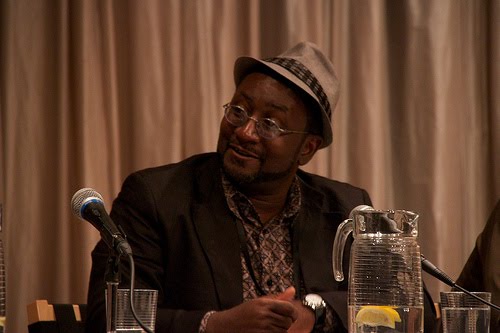
© PEN American Center/Susan Horgan. All rights reserved. Please contact media@pen.org for usage and rights.
June 3, 2013
Get help, Marquisa (Not her real name)
To Maquisa J. (Not her real name or initial). No. I do not gamble anymore. No. I do not think one can stop gambling with willpower alone. Yes. I do hope that you can get your gambling under control. Yes. It will destroy you if you don't. Yes. Pray for His help. Whatever it takes. Thanks. Preston


May 27, 2013
September 30, 2010
How Many Drafts Does It Take Before the Book Is Done?
Q: Preston, you are known for revising a lot. How do you know when you have revised enough?
A: After I revise many times, my mind begins to worry about typos and other errors I may have missed. So I revise some more.
After I revise many more times, my mind says this is great, this is publishable, excellent! But then after a few days I get anxious about how reviewers like the NY Times or Publishers Weekly or even Black Voices and the Feminist Review will feel about the book. I worry that they may not like it because they think that I am saying something or implying something that I am not. So I revise some more.
After I revise many more times, I read the manuscript and my mind says, the book is saying what it has to say. The book is saying what it needs to say. The book is saying what you want it to say, Preston. You've done it, kiddo!
At this point, I cease to be concerned about reviewers because I am no longer concerned about getting a bad review.
This is not to say that I want a bad review, but that a bad review does not matter because the book has been polished to the point where it is taking a stand. Its message is clear--if you dislike it, you are disliking it because you dislike the message not because I have written it so poorly that you miss the message or that you cannot understand the message. I do not write to be loved, necessarily. I write to be understood.
Good Question
Preston
A: After I revise many times, my mind begins to worry about typos and other errors I may have missed. So I revise some more.
After I revise many more times, my mind says this is great, this is publishable, excellent! But then after a few days I get anxious about how reviewers like the NY Times or Publishers Weekly or even Black Voices and the Feminist Review will feel about the book. I worry that they may not like it because they think that I am saying something or implying something that I am not. So I revise some more.
After I revise many more times, I read the manuscript and my mind says, the book is saying what it has to say. The book is saying what it needs to say. The book is saying what you want it to say, Preston. You've done it, kiddo!
At this point, I cease to be concerned about reviewers because I am no longer concerned about getting a bad review.
This is not to say that I want a bad review, but that a bad review does not matter because the book has been polished to the point where it is taking a stand. Its message is clear--if you dislike it, you are disliking it because you dislike the message not because I have written it so poorly that you miss the message or that you cannot understand the message. I do not write to be loved, necessarily. I write to be understood.
Good Question
Preston
August 31, 2010
Jesus Can Help
Q:
Andre's letter
My friends are talking about their 401Ks and their retirement savings, and I am thinking I can have $170 in the bank if I don't eat lunch this week.
I am thinking that I will have to work well into my 70s.
I am thinking that I am helpless.
I am thinking that the gambling is killing me--has killed me.
Then I meet a friend who changes the way I think.
His name is Jesus.
Jesus says to me: You have a great job paying you 90K a year, which is a salary in the top 10% of American salaries. You have your health. You have some of your youth left, too. These are the things I have given you to help you survive and thrive and you are worrying about the things you have thrown away and lost. Those things are gone, Andre, because you used to be a fool. Do not think about them anymore. Think on these new things--the sun that rose today, the sweet air you breathe, your job that sustains you. Do not weep over spilled milk--pour yourself a new glass of milk and drink it lustily.
And I say to him: But I have so little and it is so hard.
And he says to me: The devil is a liar. You do not have so little. You have a lot. And it is not hard. It is easy.
And I say to him: There is no cure for this addiction. No matter how hard I try to stay away, I keep going back to the casino. No matter how much I have, or how much I will potentially have, the casino will eventually take it away.
And he says to me: The devil is a liar. The casino will not take it away. The casino has never taken it away. You give it away to the casino.
And I say to him: Either way, it is still gone.
And he says to me: Give your life to me for six months. Just six months. And I shall cure you of your addiction. And I shall fix your financial situation. Do you believe that I can?
And I say to him: I believe.
And he says to me: Then give your life to me.
And I give my life to him.
And I gave my life to him for six months.
Six months later, my addiction was gone.
Six months later, my finances were still dreadful but well on their way to being fixed.
Six months later, I wonder why I ever went to a casino in the first place.
Six months later, I counsel other gamblers who seek a way out.
The way out is Jesus.
Try Jesus.
Give your life to him now.
Andre** W*** B******** (Name Withheld)
_______________
A:Okay, Lord knows I cannot argue against any method that proves to be a successful cure for a gambling addiction. If it works for you, then good--and I have met many former gamblers who got back on the right track after they had turned to God. In fact, there are many times when GA reminds me a whole lot of the churching I used to do when I was a kid. In fact, if you replace the words "higher power" with the word "God," then most 12-step programs sorta kinda look like and act like church. I just wonder what happens to the people of other religions (Jews, Hindus, and Muslims, for example) who want to kick the habit.
So yeah, seek Jesus. Seek anybody who can help you beat this thing.
Andre's letter
My friends are talking about their 401Ks and their retirement savings, and I am thinking I can have $170 in the bank if I don't eat lunch this week.
I am thinking that I will have to work well into my 70s.
I am thinking that I am helpless.
I am thinking that the gambling is killing me--has killed me.
Then I meet a friend who changes the way I think.
His name is Jesus.
Jesus says to me: You have a great job paying you 90K a year, which is a salary in the top 10% of American salaries. You have your health. You have some of your youth left, too. These are the things I have given you to help you survive and thrive and you are worrying about the things you have thrown away and lost. Those things are gone, Andre, because you used to be a fool. Do not think about them anymore. Think on these new things--the sun that rose today, the sweet air you breathe, your job that sustains you. Do not weep over spilled milk--pour yourself a new glass of milk and drink it lustily.
And I say to him: But I have so little and it is so hard.
And he says to me: The devil is a liar. You do not have so little. You have a lot. And it is not hard. It is easy.
And I say to him: There is no cure for this addiction. No matter how hard I try to stay away, I keep going back to the casino. No matter how much I have, or how much I will potentially have, the casino will eventually take it away.
And he says to me: The devil is a liar. The casino will not take it away. The casino has never taken it away. You give it away to the casino.
And I say to him: Either way, it is still gone.
And he says to me: Give your life to me for six months. Just six months. And I shall cure you of your addiction. And I shall fix your financial situation. Do you believe that I can?
And I say to him: I believe.
And he says to me: Then give your life to me.
And I give my life to him.
And I gave my life to him for six months.
Six months later, my addiction was gone.
Six months later, my finances were still dreadful but well on their way to being fixed.
Six months later, I wonder why I ever went to a casino in the first place.
Six months later, I counsel other gamblers who seek a way out.
The way out is Jesus.
Try Jesus.
Give your life to him now.
Andre** W*** B******** (Name Withheld)
_______________
A:Okay, Lord knows I cannot argue against any method that proves to be a successful cure for a gambling addiction. If it works for you, then good--and I have met many former gamblers who got back on the right track after they had turned to God. In fact, there are many times when GA reminds me a whole lot of the churching I used to do when I was a kid. In fact, if you replace the words "higher power" with the word "God," then most 12-step programs sorta kinda look like and act like church. I just wonder what happens to the people of other religions (Jews, Hindus, and Muslims, for example) who want to kick the habit.
So yeah, seek Jesus. Seek anybody who can help you beat this thing.
July 6, 2010
The Monkey on Our Back
Q:I thoroughly enjoyed the book All or Nothing. I was hesitant at first to read it when I saw what it was about.
I had an ex-husband that took me through the ringer, stealing from me, lying to me etc. as a Gambler will do (I see now from reading this book). I asked God ‘why did Preston pick this book’ and I questioned if I needed to learn something from reading it? Sooooooooooooo, I got into it, and now I’ve got a totally different outlook on addictions in general… I think we all have some sort of addiction; I know mine and I’m working to “get that monkey off my back!”
Thanks for sharing this book with me, it really was an eye opener. I look forward to reading other books written by you.
A: Thank you for these great comments!
As a writer, I feel "worthy" when I sense such a profound grasp of the book and its purpose on the part of my readers.
I don't know about other addicts, but gamblers are some of the nicest people you will ever meet. For many of them, their only flaw is that big, ugly 500 lb monkey on their back. One of the worst things about gambling addiction is how it destroys the lives of these otherwise nice people, and you feel so helpless--like there is nothing you can do to help them.
When I watch movies set in the old west and I see all those casinos, I feel kinda sad for the people who frequented them. It is the same addiction today as it was yesterday.
Only the faces change.
Thanks,
Preston
I had an ex-husband that took me through the ringer, stealing from me, lying to me etc. as a Gambler will do (I see now from reading this book). I asked God ‘why did Preston pick this book’ and I questioned if I needed to learn something from reading it? Sooooooooooooo, I got into it, and now I’ve got a totally different outlook on addictions in general… I think we all have some sort of addiction; I know mine and I’m working to “get that monkey off my back!”
Thanks for sharing this book with me, it really was an eye opener. I look forward to reading other books written by you.
A: Thank you for these great comments!
As a writer, I feel "worthy" when I sense such a profound grasp of the book and its purpose on the part of my readers.
I don't know about other addicts, but gamblers are some of the nicest people you will ever meet. For many of them, their only flaw is that big, ugly 500 lb monkey on their back. One of the worst things about gambling addiction is how it destroys the lives of these otherwise nice people, and you feel so helpless--like there is nothing you can do to help them.
When I watch movies set in the old west and I see all those casinos, I feel kinda sad for the people who frequented them. It is the same addiction today as it was yesterday.
Only the faces change.
Thanks,
Preston
Are You a Novelist?
Q: Enjoyed Jesus Boy, but all or Nothing is still my favorite. The book is sad but it cracks me up. Now that you have published Jesus Boy, your fifth novel if we count your self-published work, do you consider yourself still a short-story writer who writes novels or are you now a novelist who writes short-stories?
A: All of the above. LOL. Seriously, I still write a geat deal of short stories every year; in fact, I have two collections that I am hoping to shop soon.
Thanks,
Preston
A: All of the above. LOL. Seriously, I still write a geat deal of short stories every year; in fact, I have two collections that I am hoping to shop soon.
Thanks,
Preston
June 16, 2010
Any Regrets?
Q: You wrote a very funny, very powerful book. As a writer, now that ALL OR NOTHING is in print is there anything you would change or do differently if you had to do it all over again?
A: I love the book just the way it is. Maybe there are some deleted scenes that I would put back in. Actually, one of those deleted scenes became the basis for my erotic short story "THREE KISSES" in the collection MAKING THE HOOK-UP (Cleis Press 2010).
I do have one regret, however. I regret that some people I know have read the book and found it so fascinating that they they claim to have started for the first time in their lives to visit casinos and/or experiment with gambling.
This is not good, and this was not my intent.
Did they somehow miss the cautionary tale that was P's life?
Thanks,
Preston
A: I love the book just the way it is. Maybe there are some deleted scenes that I would put back in. Actually, one of those deleted scenes became the basis for my erotic short story "THREE KISSES" in the collection MAKING THE HOOK-UP (Cleis Press 2010).
I do have one regret, however. I regret that some people I know have read the book and found it so fascinating that they they claim to have started for the first time in their lives to visit casinos and/or experiment with gambling.
This is not good, and this was not my intent.
Did they somehow miss the cautionary tale that was P's life?
Thanks,
Preston
May 30, 2010
Writer's Block
Q: Writer's Block . . . blah, blah, blah
A: I've had at least a dozen questions in the last month about writer's block, so it's time to post my official response to it again.
Thanks,
Preston
___________________________
Writer's Block?
The question of writer's block comes up every time I teach a creative writing class, so I'm going to answer it for once and for all.
If you ever get writer's block, do what I do. Go swing a golf club.
Or go watch a movie. Or read a book. Or talk with a friend. Do something. Eat a pizza. Do anything. Just don't worry about writer's block. It goes away eventually, especially since it does not exist in the first place.
Here's the deal. If I commissioned you to write a play about a group of friends united by their love of fried conch, you'd go out and do it because, one, it's a job, and, two, you can write. Piece of cake. Your biggest problem would be doing the research on conch, but the actual writing would be a cinch.
On the other hand, if I commissioned you to go sit down and write a great play and I gave you no further directions, you'd sit on your butt and ponder suicide.
That sitting on your butt and pondering self immolation is what the layman calls writer's block. What do I write? What the heck do I write? My god, I have nothing to write about. My god, nothing is coming out of me. I'm blocked.
No you're not blocked.
Are you deaf? Can you not hear what your inner writer is really saying? I HAVE nothing to write about. Again, there is no such thing as writer's block, but there is such a thing as no assignment.
Writing is a job. Sometimes you have a boss. Sometimes you're self-employed. Either way, you've got lots of work to do. The writer with the boss (journalist, script doctor, ad person, jinglist, jingoist) never has writer's block. Heck, the writer with the boss has too much writing to do.
The self-employed writer, on the other hand, is her own boss, and now I think you see the problem. The self-employed writer has to do TWO jobs: write AND come up with the assignments. When she can't find an assignment, she says she has writer's block. The big lie. That's like a teacher saying he has teacher's block because it's summer and he can't find any kids to teach.
Follow the pen, my brothers and sisters. Follow the pen.
What the self-employed writer has to do, when he can't find an assignment is pick up the pen and write. Just write. It's your job, buddy. So write. Write anything.
"I can't find anything to write about. There is absolutely nothing to write about. The only interesting thing is that story about the dog and the necktie I was putting off to work on over the summer. Actually, that story is pretty good. It kind of reminds me of the way I used to write when . . . ."
And voila! Writer's block is gone, because it never existed.
The other thing you have to remember is that as a self-employed writer, you are not restricted to writing plays--you can write anything. So start following the pen, and maybe it will become an essay, a poem, a page in the journal, some crappy ten pages of ramblings about a mutt and a necktie, a play, a great play, whatever. It doesn't matter because you are your own boss, and thus, the only standard you set for yourself is that you find TRUTH in everything you write.
So . . . if you want to write more and feel less of that thing called writer's block that we both agree does not exist, then you must go out and get yourself a job as a writer (see list above in paragraph 7).
Or give yourself more structure as a
self-employed writer. "I am going to write two pages of dialogue in my new play every day for a month. Then I am going to write a page of synopsis of a future project every night." Then follow your rules. This rigor will work to trick the mind into thinking that you are answering to some boss who requires two pages of this or that each day or she will withhold your paycheck. There are other techniques like that, which you can find in every beginning creative writing textbook.
But, come on, it's all smoke and mirrors, really. You don't need that stuff. Structure. Groannn. Yuck. That's why you're self-employed in the first place! You hate structure. You want the freedom of writing only when it is fresh and original and novel . . . I think the word I'm searching for here is "inspired." You want the freedom to write only when you're inspired. INSPIRATION is your boss. INSPIRATION tells you what assignments to work on.
But sometimes when you sit around waiting for inspiration, you kinda feel like nothing will ever come. You kinda feel like you have writer's block. Here we go again.
Your problem is you want to have your cake and eat it, too. You want brilliant inspiration to flow from your pen, but you're too lazy to treat writing like a job and do it every day so that you get better at it and better at it until every time you pick up your pen the muses obey YOUR commands.
You want to spend months away from writing while you PLAY AT being a writer, in your smoking jacket, at those chic gatherings, where all the cool writers who, like you, have mastered the "writer's look" hang out--and then, finally, when all the parties have ended, you, with your writing muscles flabby from disuse, expect to just sit down and demand brilliance to flow.
Then when, surprise, surprise, it does not come, you claim writer's block.
That's not the way it's done, my brothers and sisters. If you want to be a writer, you'd better pick up that pen.
Every day.
And enjoy the pizza
--Preston L. Allen,
A: I've had at least a dozen questions in the last month about writer's block, so it's time to post my official response to it again.
Thanks,
Preston
___________________________
Writer's Block?
The question of writer's block comes up every time I teach a creative writing class, so I'm going to answer it for once and for all.
If you ever get writer's block, do what I do. Go swing a golf club.
Or go watch a movie. Or read a book. Or talk with a friend. Do something. Eat a pizza. Do anything. Just don't worry about writer's block. It goes away eventually, especially since it does not exist in the first place.
Here's the deal. If I commissioned you to write a play about a group of friends united by their love of fried conch, you'd go out and do it because, one, it's a job, and, two, you can write. Piece of cake. Your biggest problem would be doing the research on conch, but the actual writing would be a cinch.
On the other hand, if I commissioned you to go sit down and write a great play and I gave you no further directions, you'd sit on your butt and ponder suicide.
That sitting on your butt and pondering self immolation is what the layman calls writer's block. What do I write? What the heck do I write? My god, I have nothing to write about. My god, nothing is coming out of me. I'm blocked.
No you're not blocked.
Are you deaf? Can you not hear what your inner writer is really saying? I HAVE nothing to write about. Again, there is no such thing as writer's block, but there is such a thing as no assignment.
Writing is a job. Sometimes you have a boss. Sometimes you're self-employed. Either way, you've got lots of work to do. The writer with the boss (journalist, script doctor, ad person, jinglist, jingoist) never has writer's block. Heck, the writer with the boss has too much writing to do.
The self-employed writer, on the other hand, is her own boss, and now I think you see the problem. The self-employed writer has to do TWO jobs: write AND come up with the assignments. When she can't find an assignment, she says she has writer's block. The big lie. That's like a teacher saying he has teacher's block because it's summer and he can't find any kids to teach.
Follow the pen, my brothers and sisters. Follow the pen.
What the self-employed writer has to do, when he can't find an assignment is pick up the pen and write. Just write. It's your job, buddy. So write. Write anything.
"I can't find anything to write about. There is absolutely nothing to write about. The only interesting thing is that story about the dog and the necktie I was putting off to work on over the summer. Actually, that story is pretty good. It kind of reminds me of the way I used to write when . . . ."
And voila! Writer's block is gone, because it never existed.
The other thing you have to remember is that as a self-employed writer, you are not restricted to writing plays--you can write anything. So start following the pen, and maybe it will become an essay, a poem, a page in the journal, some crappy ten pages of ramblings about a mutt and a necktie, a play, a great play, whatever. It doesn't matter because you are your own boss, and thus, the only standard you set for yourself is that you find TRUTH in everything you write.
So . . . if you want to write more and feel less of that thing called writer's block that we both agree does not exist, then you must go out and get yourself a job as a writer (see list above in paragraph 7).
Or give yourself more structure as a
self-employed writer. "I am going to write two pages of dialogue in my new play every day for a month. Then I am going to write a page of synopsis of a future project every night." Then follow your rules. This rigor will work to trick the mind into thinking that you are answering to some boss who requires two pages of this or that each day or she will withhold your paycheck. There are other techniques like that, which you can find in every beginning creative writing textbook.
But, come on, it's all smoke and mirrors, really. You don't need that stuff. Structure. Groannn. Yuck. That's why you're self-employed in the first place! You hate structure. You want the freedom of writing only when it is fresh and original and novel . . . I think the word I'm searching for here is "inspired." You want the freedom to write only when you're inspired. INSPIRATION is your boss. INSPIRATION tells you what assignments to work on.
But sometimes when you sit around waiting for inspiration, you kinda feel like nothing will ever come. You kinda feel like you have writer's block. Here we go again.
Your problem is you want to have your cake and eat it, too. You want brilliant inspiration to flow from your pen, but you're too lazy to treat writing like a job and do it every day so that you get better at it and better at it until every time you pick up your pen the muses obey YOUR commands.
You want to spend months away from writing while you PLAY AT being a writer, in your smoking jacket, at those chic gatherings, where all the cool writers who, like you, have mastered the "writer's look" hang out--and then, finally, when all the parties have ended, you, with your writing muscles flabby from disuse, expect to just sit down and demand brilliance to flow.
Then when, surprise, surprise, it does not come, you claim writer's block.
That's not the way it's done, my brothers and sisters. If you want to be a writer, you'd better pick up that pen.
Every day.
And enjoy the pizza
--Preston L. Allen,
May 29, 2010
An Insightful Review from Craven Rock at Good Reads.com
I ran across this review of the book on Good Reads. It was so dead on it gave me chills. It kinda took me back to the zone I was in when I wrote the book. That was a black period in my life.
Thanks,
Preston
____________________________________________________________
Craven Rock from Good Reads April 9, 2010
Great fast-paced story of a compulsive gambler. It reads as quickly as a Palahniuk except the author is able to create a really solid fleshed-out character and doesn't have to rely on fun facts to distract you from that. I must note that the pacing is also the only real comparison that can make between the two authors. I couldn't get over the way that the main character, P., was presented, he does a lot of really repulsive things and risks the welfare of his family (eventually losing them) to feed his habit. But still, the reader is unable to condemn, glorify or pity P.. Allen takes you so deep into the character's head and compulsions that it makes you realize that he is neither a monster, nor a folk hero and you find yourself rooting for him on a basic human level.
Thanks,
Preston
____________________________________________________________
Craven Rock from Good Reads April 9, 2010
Great fast-paced story of a compulsive gambler. It reads as quickly as a Palahniuk except the author is able to create a really solid fleshed-out character and doesn't have to rely on fun facts to distract you from that. I must note that the pacing is also the only real comparison that can make between the two authors. I couldn't get over the way that the main character, P., was presented, he does a lot of really repulsive things and risks the welfare of his family (eventually losing them) to feed his habit. But still, the reader is unable to condemn, glorify or pity P.. Allen takes you so deep into the character's head and compulsions that it makes you realize that he is neither a monster, nor a folk hero and you find yourself rooting for him on a basic human level.
Subscribe to:
Posts (Atom)